

Transforming Industrial Infrastructure into Social and Cultural Infrastructure
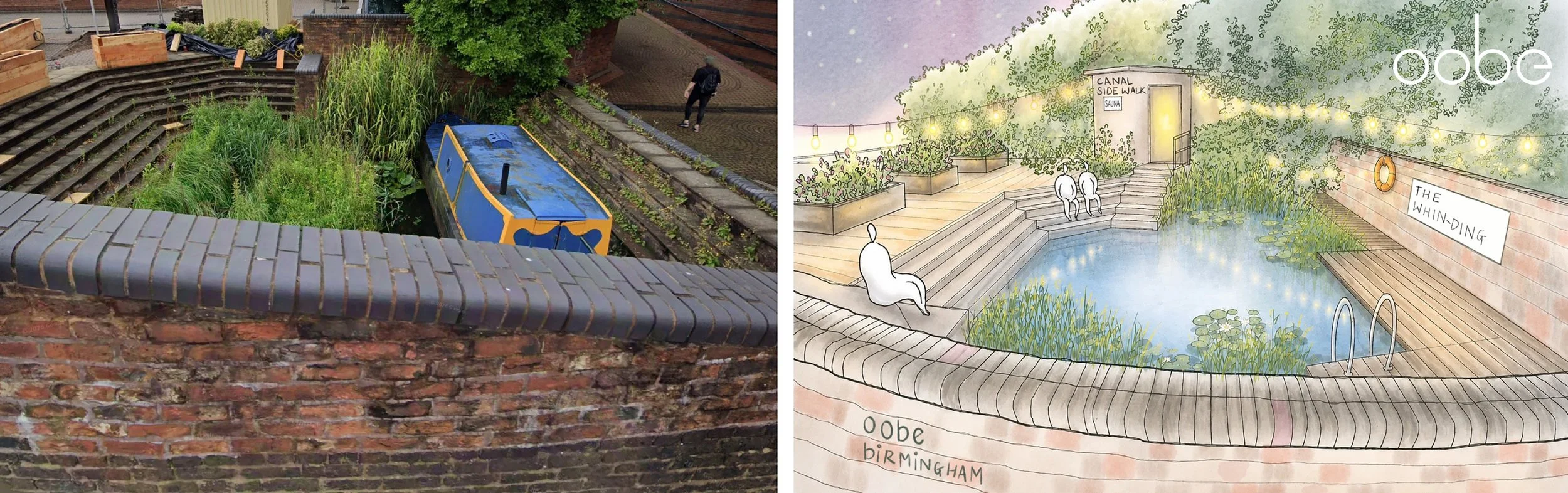
Image by OOBE
This week’s heatwave is a reminder that cities can no longer afford to place climate resilience on the back burner. As temperatures rise and pressure on public health grows, the challenge is no longer simply how cities continue to grow, but how they adapt to a much hotter and unpredictable future.
For Birmingham, that question is becoming harder to ignore. As one of the UK’s fastest-growing regional cities, with major regeneration and development activity underway, it needs to think more ambitiously about how growth is planned in the face of a changing climate. Resilience can no longer sit at the edges of planning policy; it has to shape the city’s design.
One answer may be hiding in plain sight. Birmingham’s canal network, once central to its identity and economic growth, remains one of its most significant and underused assets. Despite having more miles of canal than Venice, the city often treats its waterways as the scenic edges of development rather than infrastructure capable of shaping the city itself.
That needs to change. The real opportunity is to stop thinking about Birmingham’s canals as cosmetic backdrops and start seeing them as part of the city’s climate response. With the right planning and investment, they can become part of Birmingham’s wider blue-green infrastructure, helping to cool surrounding neighbourhoods, support biodiversity, improve flood resilience and create healthier, better-connected urban spaces.
Other European cities have already shown what is possible when water is treated as a working part of the city rather than simply as scenery. In Copenhagen, the harbour baths have transformed former industrial waterfronts into public infrastructure for health, recreation and public life.
Vienna offers another example. The Danube Island, originally created as part of the city’s flood protection system, now functions as a major piece of social and environmental infrastructure, combining resilience with biodiversity, leisure and public amenity. In both cases, water is not incidental to the urban fabric; it is one of the systems through which the city works.
That is the shift Birmingham should be considering: moving the conversation beyond aesthetics and towards the practical value that well-designed blue-green infrastructure can deliver.
A landscape-led approach is central to making that happen. Thoughtful planting, greener canal edges, and targeted interventions to improve water quality could help
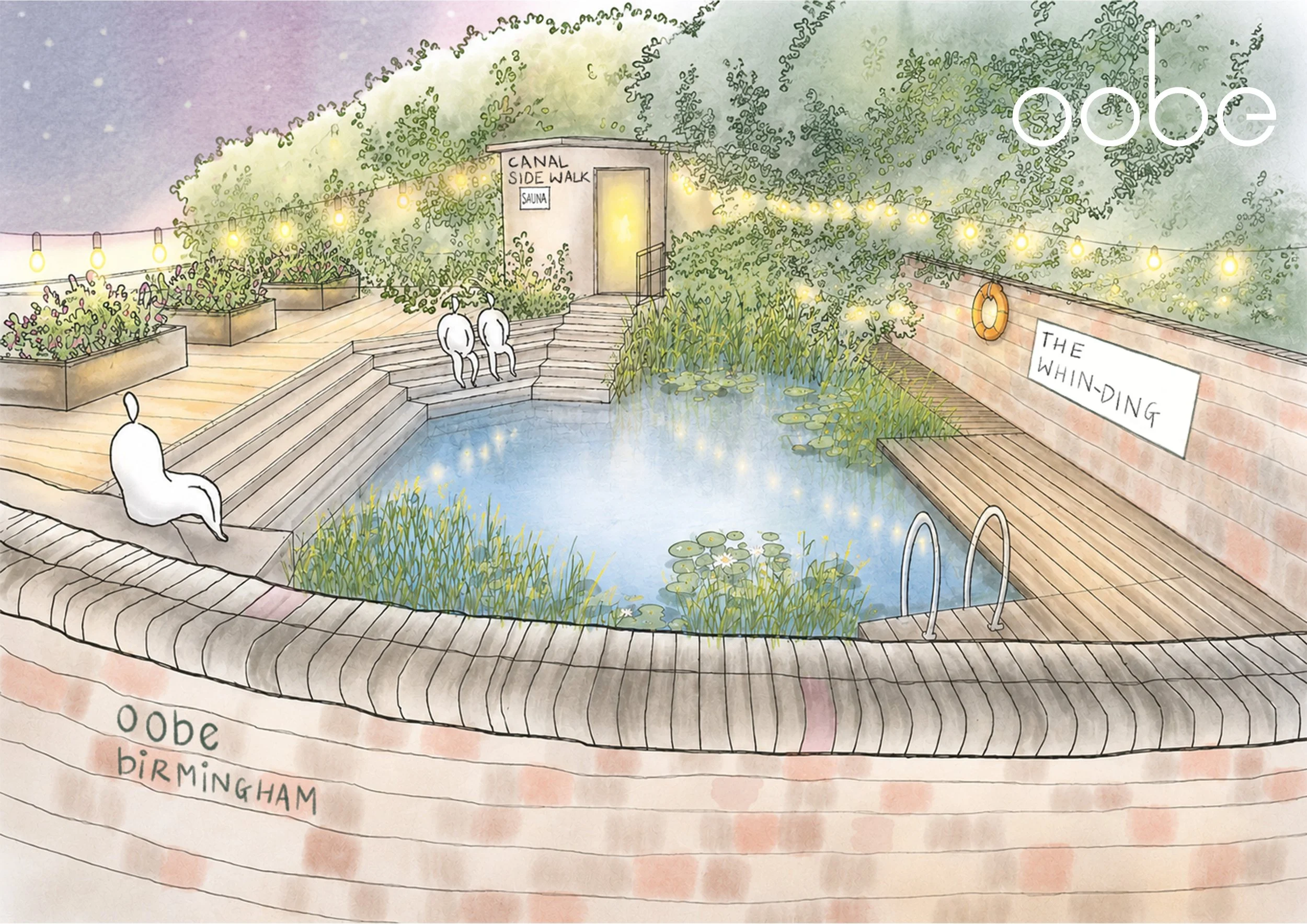
Birmingham’s canals become cooler, more biodiverse spaces, while also supporting walking, cycling and everyday access to nature. Over time, with sufficient ambition and investment, there is also scope to think more boldly about how the waterways could support recreation and public life in new ways, including managed urban swimming or canal-based leisure in suitable locations.
The point is not that canals can solve Birmingham’s climate challenges on their own. It is that the city already has the foundations of a blue-green network that could do far more if planned as a strategic system rather than a series of disconnected waterside opportunities.
That requires canal corridors to be considered much earlier in the design process, as part of the framework shaping development from the outset. It also means thinking beyond individual regeneration sites towards a city-wide approach that connects waterways, green corridors and public realm into a coherent whole.
Birmingham has a rare advantage here. Few UK cities have such an extensive network of waterways running through areas of existing and future growth. Fewer still have the chance to rethink those waterways at a moment when the need for climate adaptation is becoming impossible to ignore. The raw materials for a more resilient, liveable and climate-responsive city already exist. What has been missing is the imagination to see the canal network not as a decorative flourish, but as strategic infrastructure - and, in doing so, to begin transforming industrial networks into social and cultural infrastructure fit for the city's future.
Want to hear more about our idea? Get in touch with Claire Hunt.